Be yourself; Everyone else is already taken.
— Oscar Wilde.
This is the first post on my new blog. I’m just getting this new blog going, so stay tuned for more. Subscribe below to get notified when I post new updates.
Be yourself; Everyone else is already taken.
— Oscar Wilde.
This is the first post on my new blog. I’m just getting this new blog going, so stay tuned for more. Subscribe below to get notified when I post new updates.
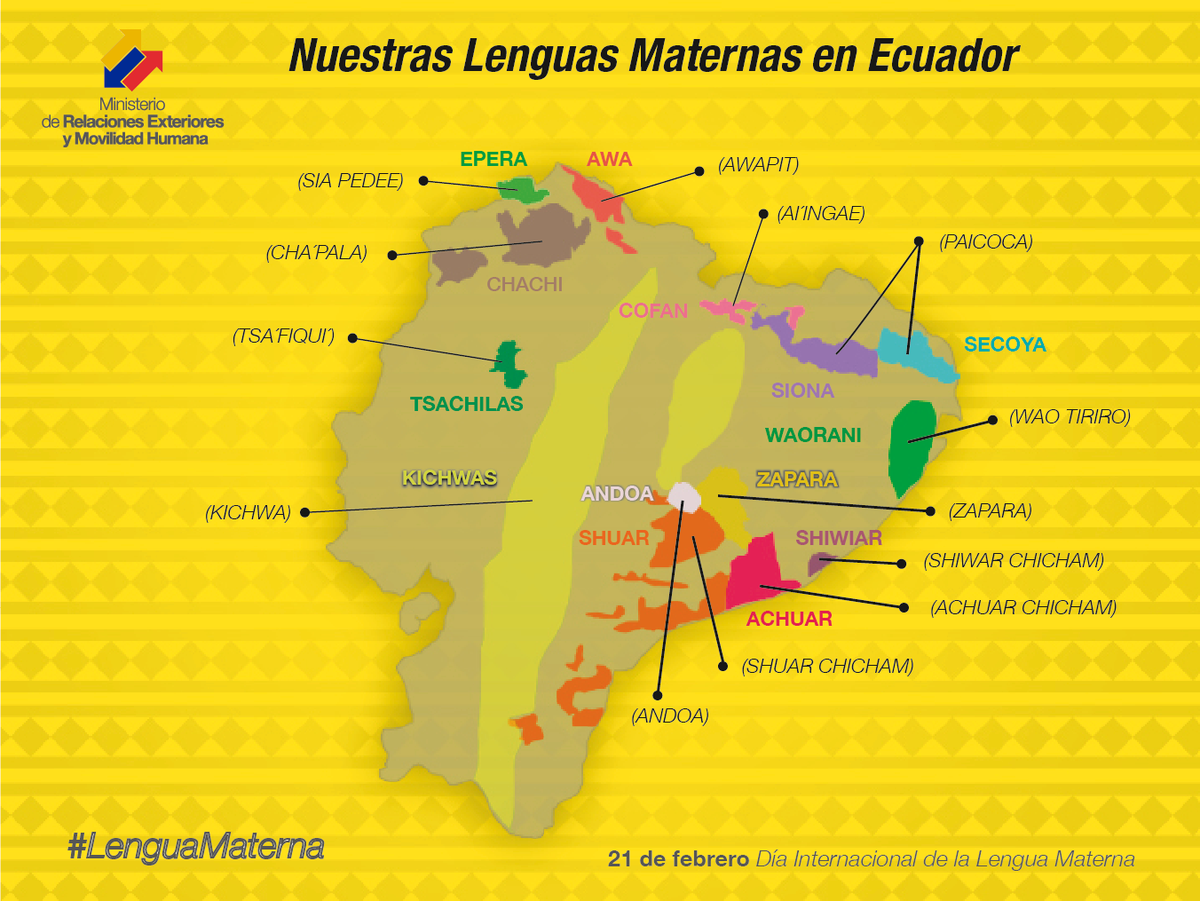
ORIGEN
El castellano es el idioma oficial del Ecuador;el kichwa y el shuar son idiomas oficiales de relación intercultural. Los demás idiomas ancestrales son de uso oficial para los pueblos indígenas en las zonas donde habitan y en los términos que fija la ley. El Estado respetará y estimulará su conservación y uso.(Art. 2 de la Constitución 2008).
CARACTERÍSTICAS
La forma de hablar en nuestro país se puede reconocer por el acento o la pronunciación, ya que aun hablando el castellano hay diferencias por ejemplo:
En Guayaquil hablan rápido, en Quito la r se arrastra mucho y por lo general se suele aumentar la f al final de una frase, en Cuenca se habla medio cantado, etc.
Si en las tres principales Ciudades del país hay cambios, más aun en todo nuestro bello país, las lenguas nativas o maternas han ido perdiendo valor lamentablemente, pero cada lengua tiene un detalle que la diferencia de la otra aunque en ocasiones suenen muy similar.
UBICACIÓN
En la región Costa del Ecuador se hablan 4 lenguas indígenas:
En la Sierra sólo existe 1 lenguaje ancestral:
La Amazonía se hablan con 9 actualmente:
ASPECTOS RELEVANTES
– Existe el día internacional de la lengua materna y es el: 21 de Febrero
– Actualmente son pocos los pueblos que impulsan la enseñanza de su lengua nativa.
– Existen personas encargadas de transmitir o traducir una lengua nativa al castellano, se los conoce como interpretes.
– Los interpretes deben ser personas serias y responsables ya que si hay una sola palabra alterada, podrian generar malos entendidos y enemistades.
This is an example post, originally published as part of Blogging University. Enroll in one of our ten programs, and start your blog right.
You’re going to publish a post today. Don’t worry about how your blog looks. Don’t worry if you haven’t given it a name yet, or you’re feeling overwhelmed. Just click the “New Post” button, and tell us why you’re here.
Why do this?
The post can be short or long, a personal intro to your life or a bloggy mission statement, a manifesto for the future or a simple outline of your the types of things you hope to publish.
To help you get started, here are a few questions:
You’re not locked into any of this; one of the wonderful things about blogs is how they constantly evolve as we learn, grow, and interact with one another — but it’s good to know where and why you started, and articulating your goals may just give you a few other post ideas.
Can’t think how to get started? Just write the first thing that pops into your head. Anne Lamott, author of a book on writing we love, says that you need to give yourself permission to write a “crappy first draft”. Anne makes a great point — just start writing, and worry about editing it later.
When you’re ready to publish, give your post three to five tags that describe your blog’s focus — writing, photography, fiction, parenting, food, cars, movies, sports, whatever. These tags will help others who care about your topics find you in the Reader. Make sure one of the tags is “zerotohero,” so other new bloggers can find you, too.

 Blog Erick Alvear